Pumps · sumps · site dewatering
Secure remote monitoring for pumps, sumps and site dewatering
TrackSyte® delivers secure remote asset monitoring for industrial and site dewatering — overpumping, sump and temporary water pumps — the power, link health and Modbus/RS485 field status that keep wet-site kit useful when nobody is standing next to it. One gateway. CAN, Modbus, Ethernet, LTE — into one monitoring stack, so exceptions reach TrackSyte® Portal before a flooded compound or a silent hire pump becomes an overnight call-out.
This page is about pump and sump asset health, not fleet-locator marketing. GNSS is fitted as standard on Neo 2 — a full-constellation GPS/GNSS receiver that can support tracking and GPS-related functions, alongside the gateway and Portal monitoring stack.
Why pumps and sumps still need site visits
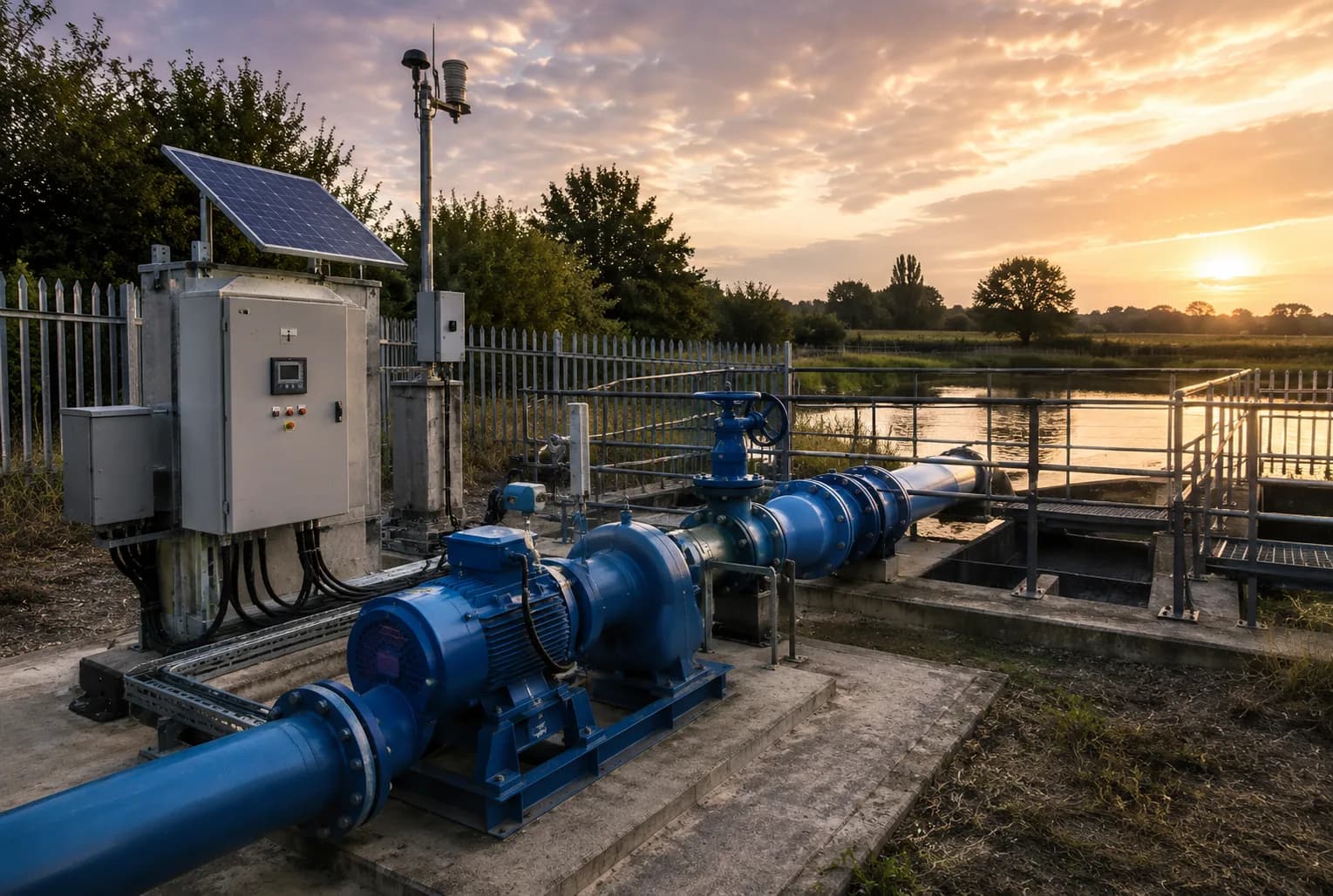
Blind pumps still drive truck rolls across UK construction sites, basements and hire fleets. A sump that stops clearing overnight, an overpumping set that loses power, or a temporary hire pump that drops offline often only shows up when water is already where it should not be — or when a client calls asking why the compound is wet. By then the visit cost is spent, and the fault may turn out to be a flat battery, a dropped cellular link or a controller that needed a soft reset.
That pattern is expensive for hire desks and main contractors alike. Overnight call-outs, unused truck rolls and “is it even running?” checks eat margin on temporary water kit. Flooded compounds and basement alarms do not wait for morning; they force reactive despatch even when the underlying issue was simple connectivity or power health.
Remote visibility of pump power, link health and wired level or IO status closes that gap without inventing OEM partnerships or level-sensor brands TrackSyte has not approved. Secure remote asset monitoring for pumps and sumps is about knowing whether the asset stack is alive before you assume the pump itself has failed.
What you can see and act on remotely
With TrackSyte® you see power, connectivity and site status in Portal — and level or IO where those signals are wired into the gateway. Status and alerts surface so ops and hire desks can prioritise real faults: offline links, power anomalies and conditions that justify a visit, versus noise that can wait until the next planned call.
Ops, hire desks and site managers share one view across scattered pumps. That matters when the person who can swap a SIM or check a battery is not the person who first hears “the sump’s full.” Clear status reduces the chase between site, workshop and the client who expected dry ground overnight.
That is the commercial point. Fewer unnecessary site visits means lower operating cost on hire and temporary pump fleets. See how that plays out in commercial impact, or run the numbers with the site visit calculator. TrackSyte is built for UK temporary and hire fleets from Cornwall — About covers who we are and how we work with field operators.
How TrackSyte Neo 2 fits pump and sump sites
One gateway. CAN, Modbus, Ethernet, LTE — into one monitoring stack. For pumps and sumps the interfaces that usually matter first are RS485 / Modbus, Ethernet, cellular IoT (LTE-M / NB-IoT) and GPIO where you need discrete status or IO.
TrackSyte Neo 2 is the multi-protocol gateway that brings those paths into one monitoring stack and on into Portal over MQTT / API. RS485 is fitted on Neo 2 — it is not a Hub-only story. See the RS485 / Modbus capability page for the serial field-bus explainer, and Ethernet plus cellular IoT for wired versus remote backhaul.
Neo 2 also ships with a 12V supply and Bluetooth for nearby power and battery conversations — including Victron, smart/lithium BMS and Smart Shunt where that kit sits on powered trailers or pump compounds. CAN applies lightly here when adjacent plant shares the compound; deep plant/CAN proof lives on construction equipment telematics and the CAN bus capability page.
GNSS is fitted as standard on Neo 2 — a full-constellation GPS/GNSS receiver that can support tracking and GPS-related functions. We do not invent fleet-locator marketing beyond confirmed Neo 2 positioning, Canvas naming, Offer prices or fake compliance seals on this page.
- RS485 / Modbus connectivity (Neo 2 — fitted, not Hub-only)
- Ethernet connectivity (Neo 2)
- LTE-M / NB-IoT cellular options (Neo 2)
- GPIO connectivity where used for status/IO (Neo 2)
- 12V supply and Bluetooth (Neo 2)
- Victron / smart-lithium BMS / Smart Shunt conversations where that kit is on site
- GNSS fitted as standard — full-constellation GPS/GNSS that can support tracking and GPS-related functions
Typical setups
Construction overpumping. A temporary overpumping set on a civils or basement job needs power and link health more than another dashboard. Neo 2 backhauls Modbus/RS485, Ethernet or cellular status into Portal so the hire desk knows before the client calls about standing water.
Sump in a basement or compound. Basement and compound sumps often run quietly until they do not. Remote alerts on power, connectivity and wired level or IO cut the “drive out to see if it’s pumping” loop — especially overnight when flooding risk is highest.
Hire pump fleet under one Portal. Operators with pumps scattered across counties need one place to see which assets are healthy, which need a visit, and which can wait. Portal is that shared view, so exceptions drive the diary instead of a standing rota of check visits.
Pump plus generator compound. Many wet sites sit next to temporary or hybrid power. Cross-link hybrid and temporary power monitoring for the genset and BESS story; keep this page focused on the pump and sump stack under the same Portal. Compounds that also run security towers can light-touch CCTV tower monitoring or PID monitoring.
- Construction overpumping
- Sump in a basement or compound
- Hire pump fleet under one Portal
- Pump plus generator compound
Security — physical site and cyber basics
Physical. Pumps and sumps sit on wet compounds, basements and temporary sites where flooding and power loss are real operational risks. Remote monitoring of power, connectivity and wired status supports that physical job without replacing pump controllers or inventing level-sensor brands. Knowing the asset is reachable is part of keeping the compound honest — it is not a substitute for site design or emergency response.
Cyber. Data paths into TrackSyte use authentication, TLS, certificates and MQTT. We describe those basics plainly; we do not invent ISO, SOC or other compliance badges. Secure remote asset monitoring here means controlled access to operational status — not a marketing seal you cannot verify.
FAQs
Does TrackSyte replace a pump SCADA or OEM controller?
No. TrackSyte® monitors and connects remote pump and sump assets into the Portal. It does not replace manufacturer pump controllers, SCADA or hydraulic engineering.
Does Neo 2 include GPS / GNSS for pump sites?
Yes. GNSS is fitted as standard on Neo 2: a full-constellation receiver that can support tracking and GPS-related functions, alongside the gateway and Portal monitoring stack for pump power, connectivity and status.
Does Neo 2 support RS485 and Modbus for pumps?
Yes. RS485 is fitted on Neo 2 — including Modbus where field devices speak it — alongside CAN, GPIO, LTE-M / NB-IoT, Ethernet, 12V supply and Bluetooth. RS485 is not exclusive to Hub. See /hardware/neo-2 and /capabilities/rs485-modbus.
How does this reduce site visits?
Status and alerts in Portal help ops confirm whether a pump fault is power, connectivity or something that needs a van — so teams despatch on exceptions, not routines. See commercial impact and the site visit calculator for the visit-cost story.
See pump & sump monitoring on a demo
If you run hire or site pumps and want fewer blind call-outs, book a demo. We will walk through Neo 2 on a pump-style setup — including Neo 2’s fitted RS485/Modbus — Portal visibility and how alerts change the visit pattern. Bring a real fleet shape if you can; we map interfaces honestly and stay inside product truth.