Capability · cellular IoT
Cellular IoT connectivity for secure remote asset monitoring
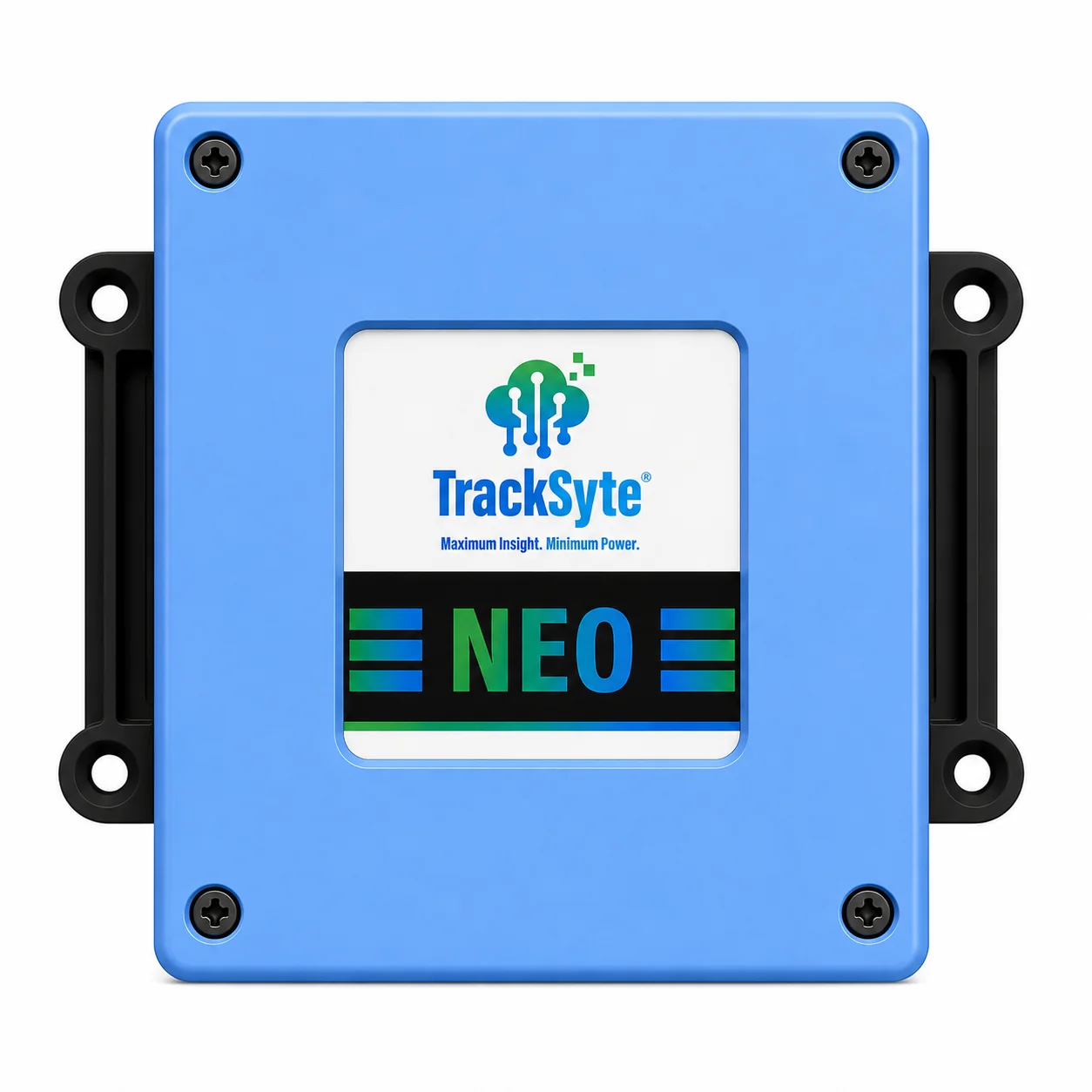
Cellular IoT is how remote TrackSyte sites stay online when there is no reliable Ethernet edge — hire yards, temporary compounds and plant that move weekly. TrackSyte® folds that into secure remote asset monitoring: one gateway, CAN, Modbus, Ethernet, LTE — into one monitoring stack. Neo 2 provides cellular backhaul (LTE-M and NB-IoT paths) into TrackSyte® Portal over MQTT / API, alongside wired Ethernet where available.
GNSS is fitted as standard on Neo 2 — a full-constellation GPS/GNSS receiver that can support tracking and GPS-related functions, alongside the gateway and Portal monitoring stack. This page focuses on cellular backhaul for remote asset monitoring — not industrial VPN or PLC remote-access ICP. We do not invent fleet-locator marketing beyond confirmed Neo 2 positioning.
What cellular IoT means for field assets
In plain English, LTE-M and NB-IoT are cellular paths designed for devices and gateways that need to stay reachable without a full consumer broadband link. On hire yards and remote compounds, that means the gateway can report power, link and asset status when the trailer is off the wired network — or when Ethernet is unavailable that week.
Site teams care because temporary assets move, and SIM health often decides whether overnight coverage is real. Hire desks get exception-based visibility: offline links and power anomalies that justify a visit, instead of discovering a dark tower or silent genset when the client calls. For UK construction and temporary fleets, cellular IoT is the backhaul that keeps remote assets in Portal when the Ethernet edge stops at the compound fence.
We keep the language practical. We do not invent carrier partnerships, coverage maps or SLA seals on this page. The point for buyers is simpler: Neo 2 can backhaul supported field interfaces over cellular IoT into TrackSyte’s monitoring stack.
What Neo 2 supports
Locked truth: Neo 2 supports LTE-M and NB-IoT cellular connectivity (out), with Ethernet as the wired sibling — pair, not compete. Also in / fitted: CAN, Modbus, GPIO, RS485, 12V, Bluetooth. GNSS is fitted as standard — full-constellation GPS/GNSS that can support tracking and GPS-related functions. Into Portal: MQTT / API over cellular (and Ethernet where used).
RS485 is on Neo 2, not Hub-only. Cellular and Ethernet are complementary backhaul paths — many sites use cellular when remote and Ethernet when the cabinet is wired. Serial and plant siblings: RS485 / Modbus and CAN bus. Canonical hardware: Neo 2. Family depth: Hardware & integrations. Original Neo’s public story remains LTE Cat 1 bis — distinct from Neo 2 LTE-M / NB-IoT; do not generalise modem claims across the family.
- Cellular out: LTE-M · NB-IoT
- Wired sibling: Ethernet — pair, not compete
- In / fitted: CAN · Modbus · GPIO · RS485 · 12V · Bluetooth
- GNSS fitted as standard — full-constellation GPS/GNSS that can support tracking and GPS-related functions
- Into Portal: MQTT / API
- Distinct from Neo LTE Cat 1 bis
Where cellular IoT shows up on site
CCTV towers. Mobile and temporary towers often live beyond reliable Ethernet. Sector: CCTV tower monitoring.
PID and perimeter sites. Remote intrusion stacks need link health when staff cover is thin. Sector: PID monitoring.
Pumps and temporary power. Wet-site and hybrid power assets move with the job. Sectors: pump and sump monitoring · hybrid and temporary power.
Construction fleets and plant. Mixed site estates and plant yards use cellular when compounds are temporary. Umbrella: construction fleet monitoring; plant CAN depth: construction equipment telematics.
- CCTV towers beyond reliable Ethernet
- PID / perimeter with thin staff cover
- Pumps and hybrid / temporary power on the move
- Mixed construction fleets and plant yards
Into TrackSyte Portal
Cellular IoT traffic joins the same secure remote asset monitoring path as other Neo 2 interfaces: into TrackSyte® Portal over MQTT / API. For developer and integration detail see the API integration. Ops still get the Portal view whether the site is on LTE-M, NB-IoT or Ethernet that week.
Secure data-path language stays honest: authentication, TLS, certificates and MQTT. No invented ISO, SOC or compliance badges. Optional commercial proof: commercial impact. Cornwall HQ and company context live on About for EEAT.
FAQs
Does Neo 2 support LTE-M and NB-IoT?
Yes. Neo 2 supports LTE-M and NB-IoT cellular connectivity, alongside Ethernet, CAN, Modbus, GPIO, RS485, 12V supply, Bluetooth and GNSS as standard.
Is this the same as Neo LTE Cat 1 bis?
No. Original Neo’s public connectivity story includes LTE Cat 1 bis. Neo 2’s LTE-M and NB-IoT options are device-specific — do not generalise modem claims across the family.
Does Neo 2 include GPS / GNSS as well as cellular?
Yes. GNSS is fitted as standard on Neo 2: a full-constellation receiver that can support tracking and GPS-related functions, alongside cellular backhaul into the Portal monitoring stack. This page focuses on cellular connectivity.
Do you publish modem bands, carrier maps or SKUs here?
No. This page describes LTE-M and NB-IoT cellular connectivity without inventing bands, modem models, carrier partnerships or coverage guarantees.
Is cellular IoT here an industrial VPN gateway?
No. LTE-M / NB-IoT on Neo 2 is cellular backhaul into TrackSyte® Portal for secure remote asset monitoring of towers, power, pumps and plant. It is not industrial VPN, OPC-UA factory remote access or a machine-builder service desk.
Explore cellular IoT on Neo 2
If your towers, plant or temporary power sit beyond the Ethernet edge and you want cellular IoT into a secure remote monitoring stack, book a demo. We will map Neo 2’s LTE-M / NB-IoT paths alongside Ethernet, RS485 and CAN where relevant, and show Portal. We do not invent carrier maps; we map interfaces honestly to product truth.